Convolutional Neural Network (CNN)
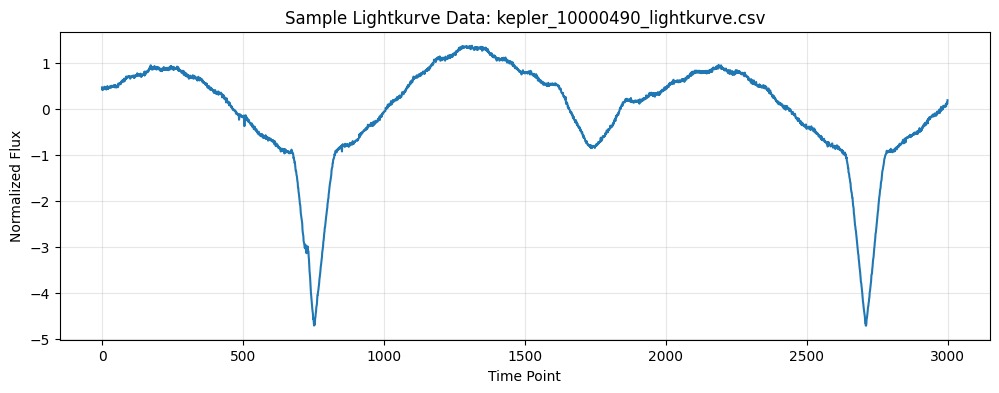
The CNN finds patterns in a star’s brightness over time (the light curve) to decide if there’s likely a planet or not.
What it does
- Looks for small, repeated dips in brightness that could be a planet passing in front of a star
- Outputs one of two labels: CANDIDATE or FALSE POSITIVE, with a confidence score
When to use it
- You have time-series light curve data (one brightness value per time step)
- You want a fast, end-to-end model that learns directly from the signal
Data needed
- CSV per star with a
pdcsap_flux(preferred) orfluxcolumn - Each series is standardized to length 3000 (we pad or trim)
Preprocessing steps (automatic):
- Remove missing values
- Remove outliers (3-sigma rule)
- Normalize to zero mean, unit variance
- Reshape to (3000, 1)
How the model works (simple)
- A small 1D convolution scans the light curve to detect transit-like shapes
- Max pooling reduces noise and focuses on important parts
- Dense layers combine the detected features to make a final decision
Model architecture (at a glance)
- Conv1D (10 filters, small kernel) → MaxPool → Dropout (20%)
- Dense(32, ReLU) → Dropout (40%)
- Dense(18, ReLU)
- Output: 1 neuron with Sigmoid (probability of candidate)
Training setup:
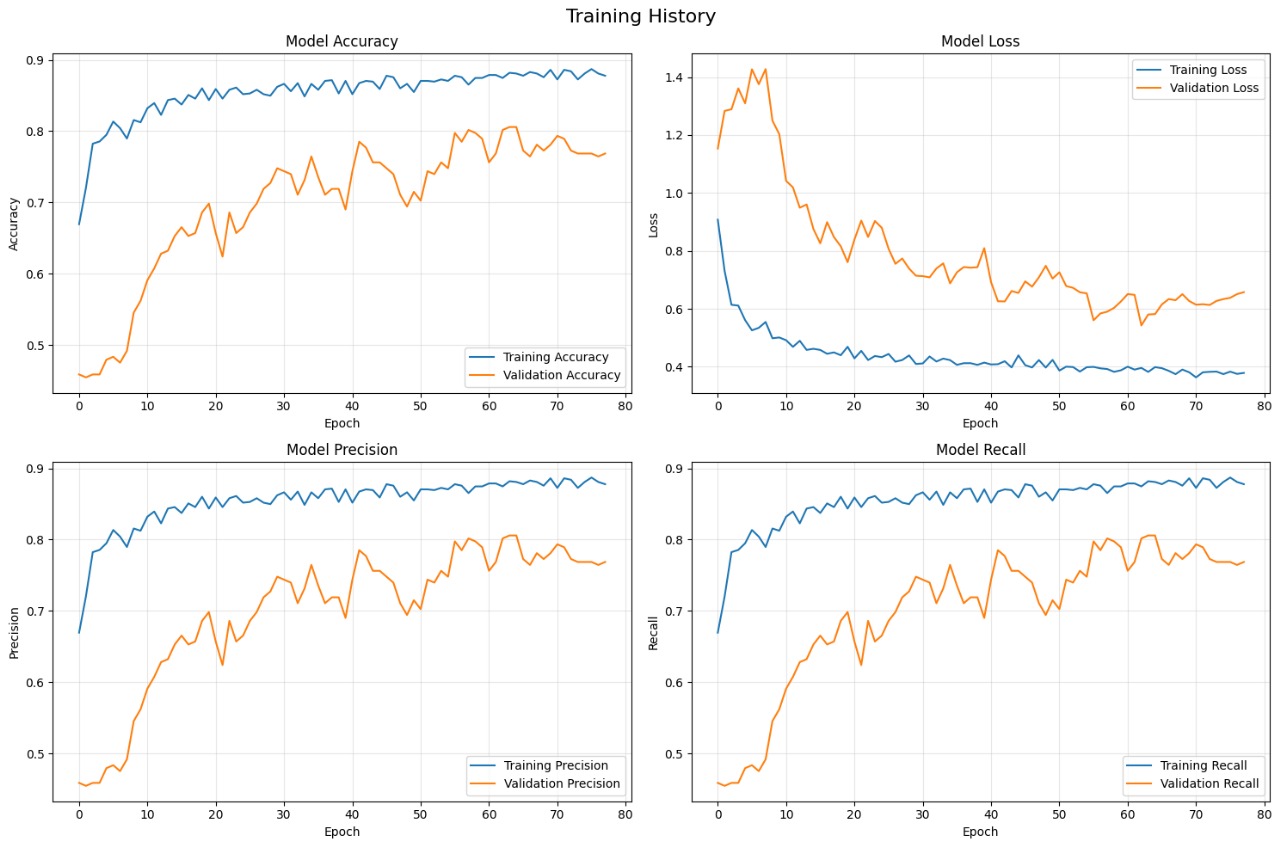
- Optimizer: Adam | Loss: Binary cross-entropy | Batch: 64 | Epochs: ~30
- Early stopping + learning-rate decay to avoid overfitting
Imbalance handling (SMOTE):
- We oversample the rare class (CANDIDATE) and lightly undersample the common class to balance training
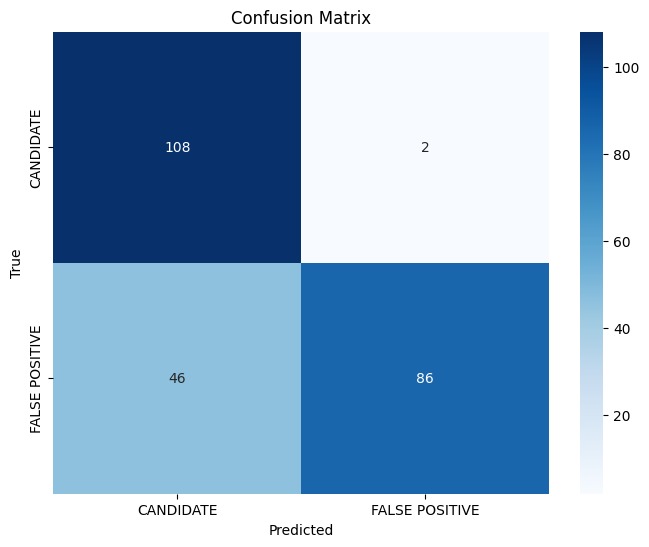
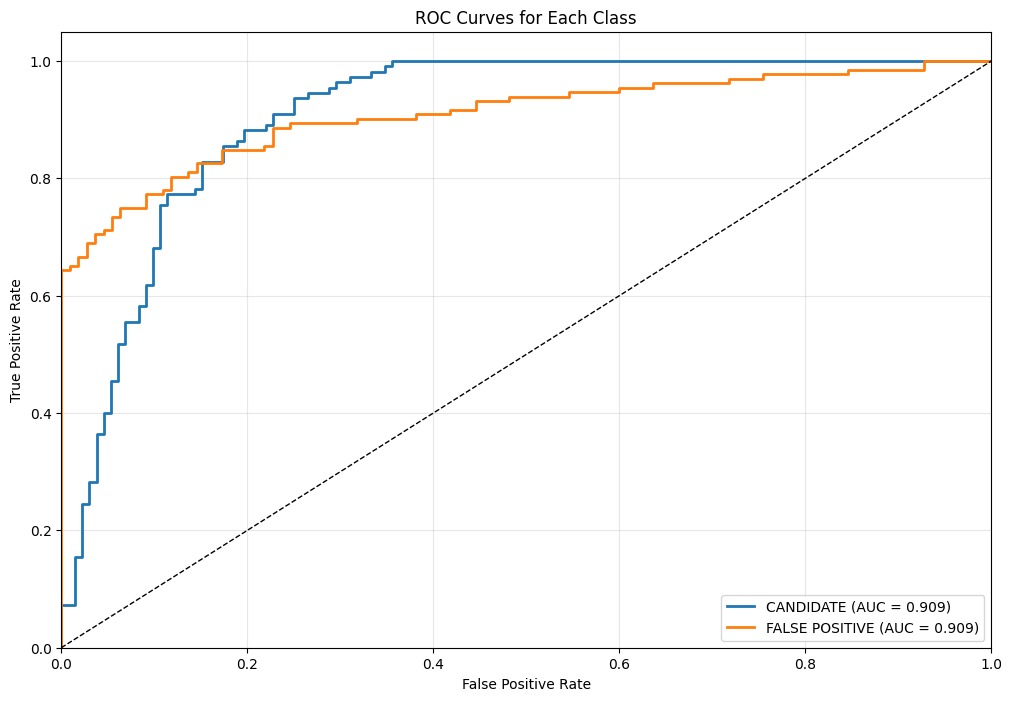
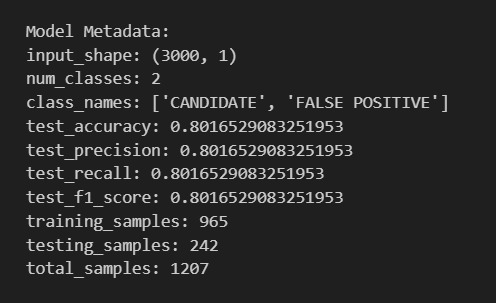
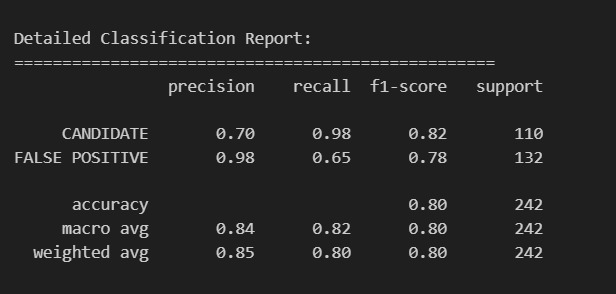
What you’ll see (example outputs)
Try it (concept)
- Predict one star: python lightkurve_predictor.py 10904857
- List test IDs: python lightkurve_predictor.py 0 --list-ids
- Point to custom files: use --model / --data-path / --metadata flags
Tips & limitations
- Keep the series length at 3000 for best results
- Predictions are fast (less than 1s) on modern machines
- Works best when light curves are clean; heavy noise may require extra filtering